Covalence capstone, Winter to Spring 2026
Reaching the Nearby Neighbor
Rainier Valley Food Bank had capacity and the neighborhood had need. Most of the neighborhood did not know the food bank existed.
- My role
- Project Manager, Phase 2. Researcher.
- Timeline
- Winter to Spring 2026
- Team
- Michelle Nguyen, Wenyi Tsai, Justis Peppin, Angel Torres-Puga. Advisor: Prof. Emeritus Andrew Davidson.
- Recognition
- HCDE 2026 Capstone Award for Engagement
01
The gap next door
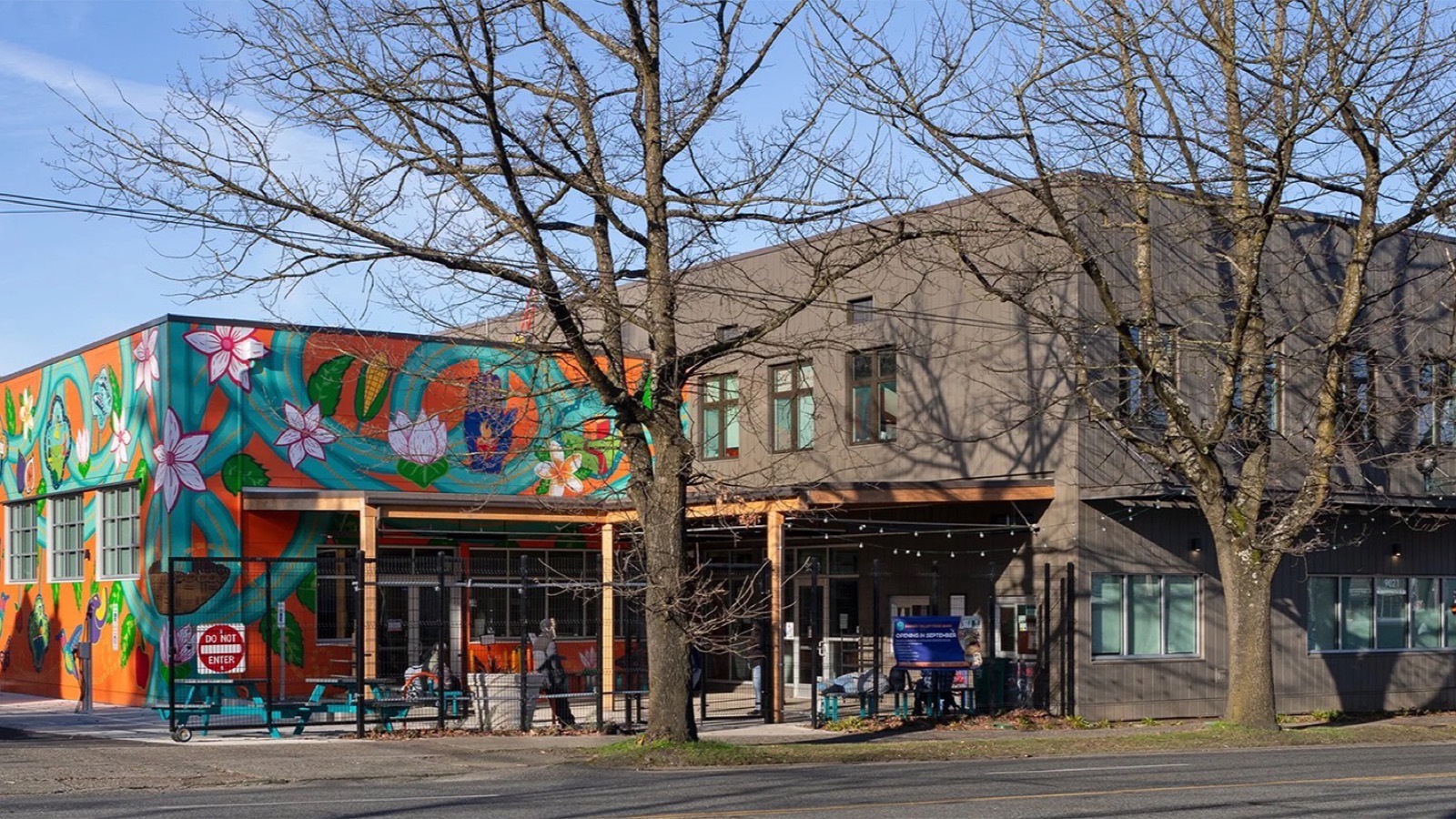
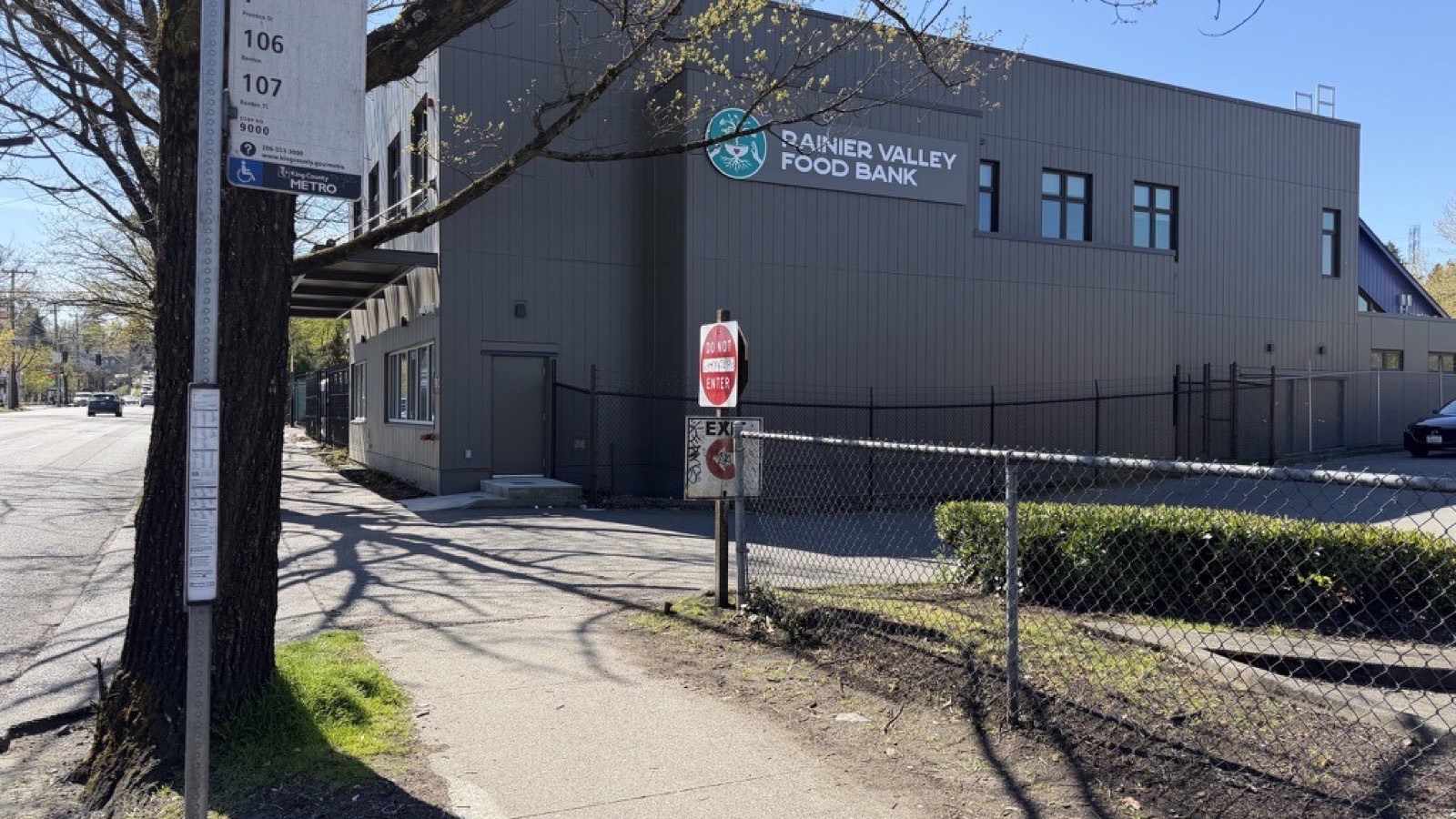
Rainier Valley Food Bank moved into a new facility in 2025 with more capacity than before. The neighborhood's need had not changed. An internal observation surfaced the paradox: residents living immediately nearby were underrepresented among the people using it.
How might we increase engagement, trust, and perceived accessibility among nearby residents who are not currently using RVFB's services?
The gap was not a shortage of food. It was a shortfall in trust, awareness, and structural accessibility, and we treated it as exactly that instead of a logistics problem.
02
How the team was set up
Four of us ran the capstone as Team Covalence across two quarters, advised by Andrew Davidson, Professor Emeritus. Each of us managed one of the four phases.
Michelle Nguyen: Phase 1, Discovery. Field study and survey design. Me: Phase 2, Synthesis. Turning field and survey data into the audience profiles and journey map. Wenyi Tsai: Phase 3, Prototyping. Angel Torres-Puga: Phase 4, Validation.
I coordinated scheduling, logistics, and stakeholder communication with RVFB throughout, and led the in depth interview with a community volunteer we call B.
03
Research and fieldwork
Mixed methods on purpose: a field study and interviews for the shape of the problem, a survey for how common that shape actually was.
- Field studyNinety minutes on site. Ten rapid fire interviews with staff and visitors, plus a full walkthrough photographing signage and entry points.
- SurveySix sections, deployed in English and Spanish. Thirteen responses.
- Five in depth interviewsFour Zoom sessions across three participant types: non-users, current and past users, and organization affiliated staff. Thirty to forty five minutes each.
I never let anyone feel ashamed about it. Free food is free food.
B, community volunteer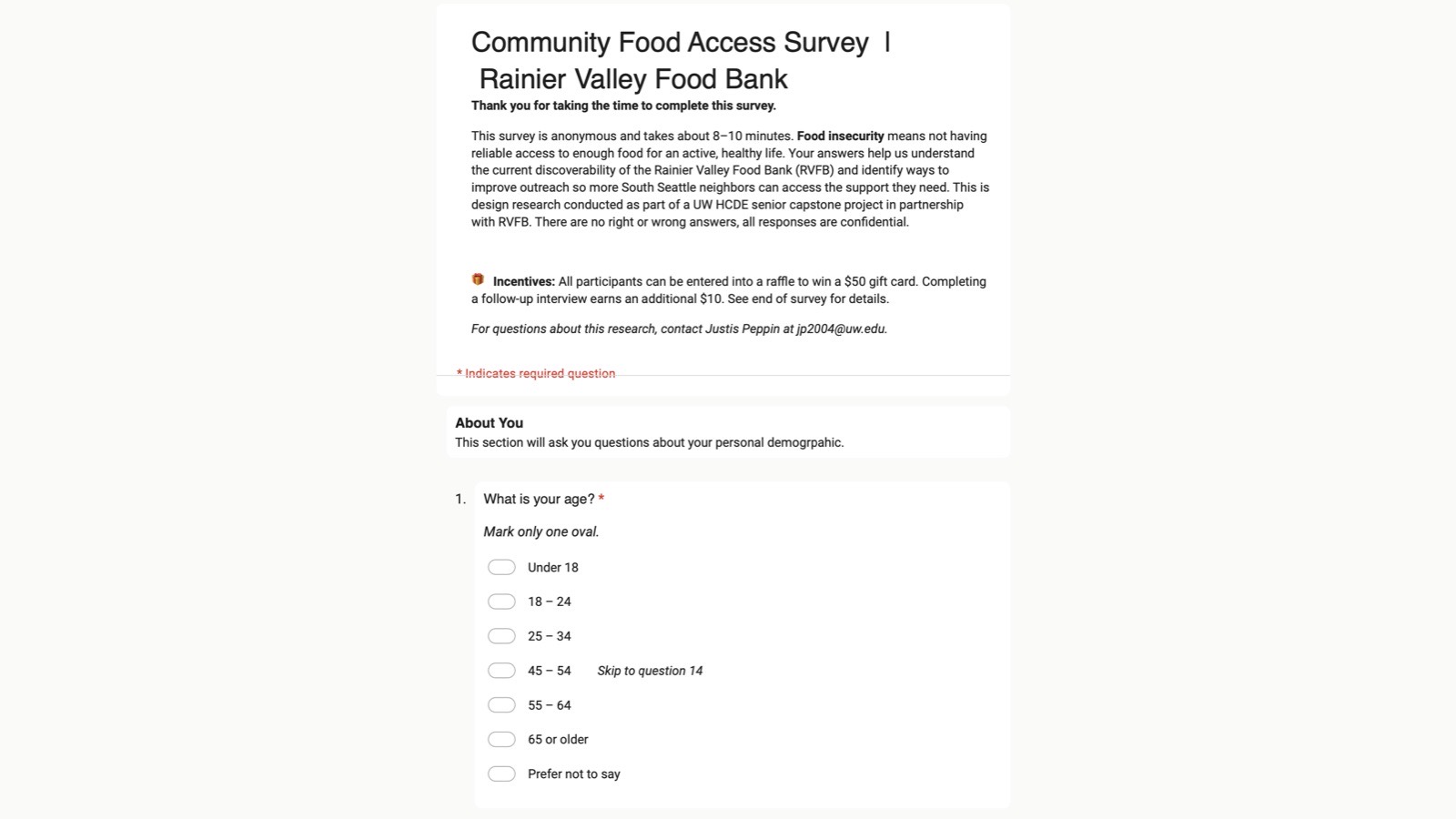
04
The finding, and six profiles
We assumed the barrier was logistics: hours, transportation, paperwork. It was not.
53.8%
of survey respondents had never heard of RVFB serving their own neighborhood.
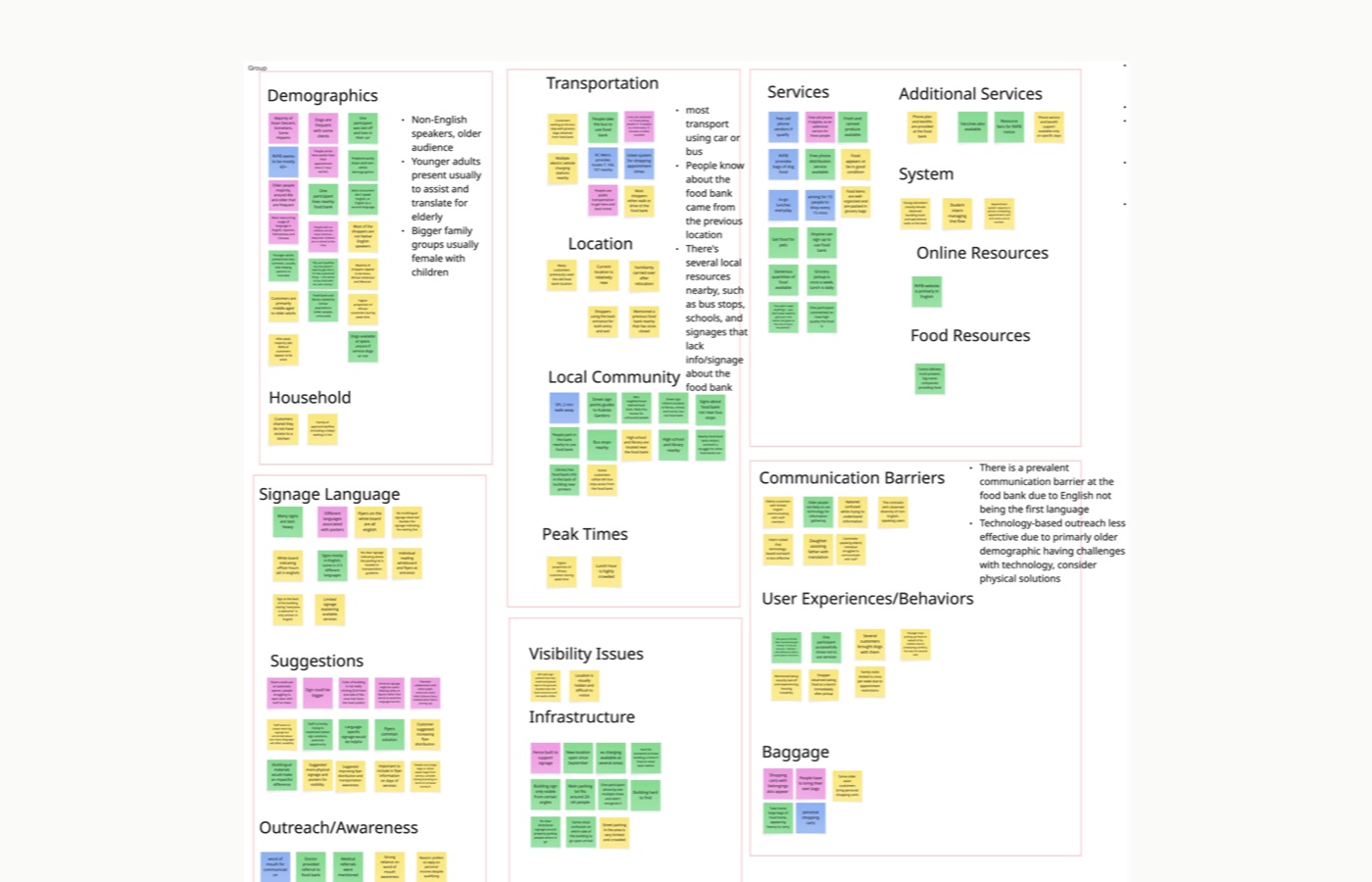
Stigma was the most cited reason for staying away. Coding and affinity diagramming across the field notes, survey, and interviews turned that into six audience profiles, from Wise Collectors, RVFB's current core visitors, to Seekers, people who want help and do not know it exists.
05
Key decisions
A four person team could not chase every idea the research surfaced. Two calls shaped what we built.
- Decision
- Built the journey map around the Seeker persona, not the Avoider or the Wise Collector.
- Why
- The Seeker's barrier is awareness, which outreach design can move. The Avoider's barrier is stigma, which needs slower, structural work than one term allows.
- Tradeoff
- We designed for the resident who does not know RVFB exists, not the one who knows and stays away out of shame.
- Decision
- Built physical outreach material, not a website or an SMS system.
- Why
- Field and interview data showed the neighborhood responds to visible, in place, tactile material. 78% of survey respondents backed bus stop or poster outreach specifically.
- Tradeoff
- No digital channel, and no way to track reach the way a link or a QR scan would have given us.
06
What we made
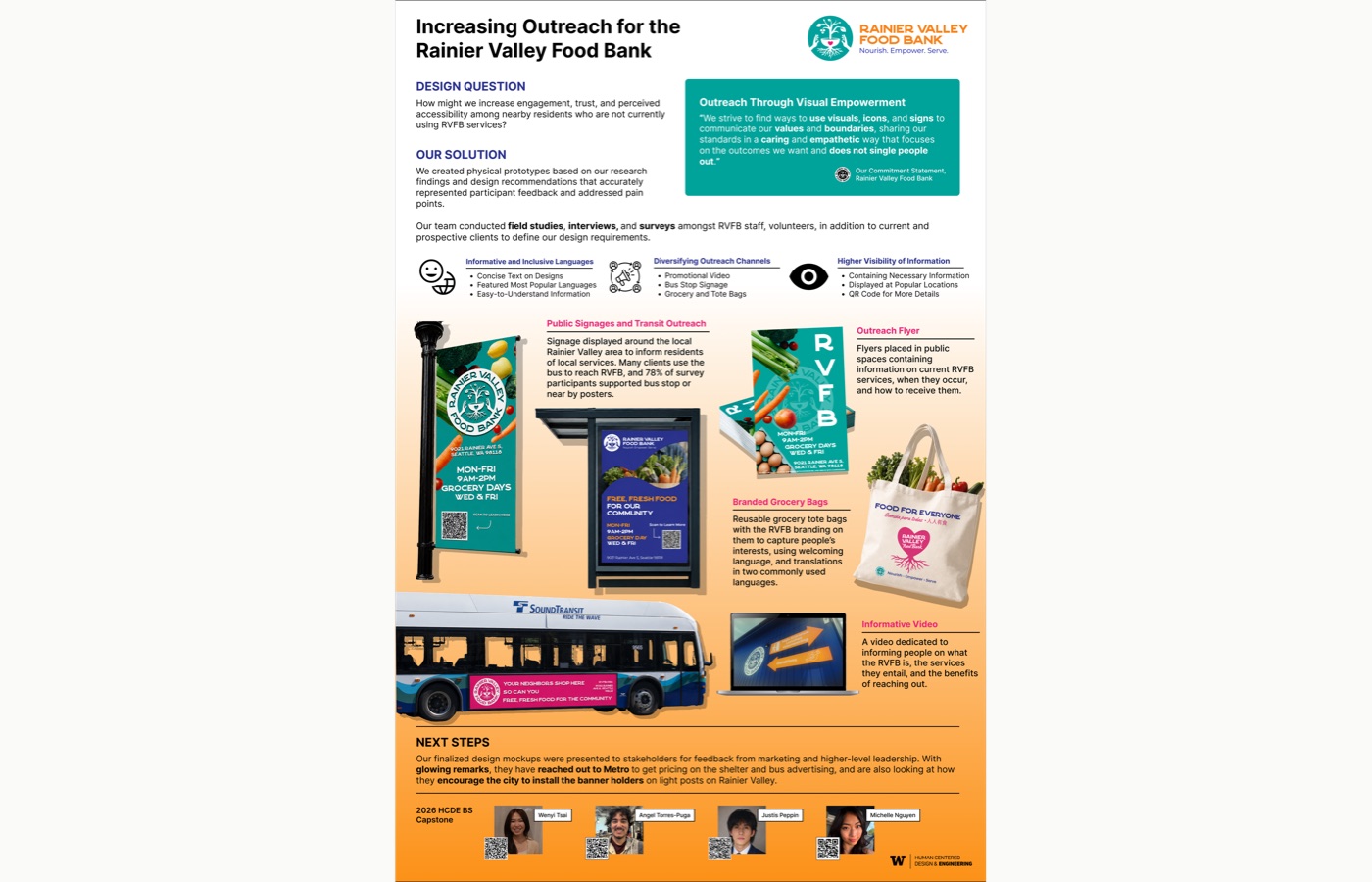
Six profiles and the Seeker's journey gave us the targets. The team built physical outreach aimed at meeting people on the commute they already make, in the language they already speak.
-
01
Outreach flyer
Print, five community languages, QR to landing page
Targets the Seeker profile: the resident who qualifies and does not know RVFB serves their block.
-
02
Pole banner
18 by 36 in, light posts, Rainier Ave corridor
Placed where the field study logged the highest pedestrian counts.
-
03
Transit advertising
Bus shelter and interior car placements, Rainier Valley
Meets the audience mid commute, the one trip the research confirmed they already make.
-
04
Reusable bags and stickers
Take home collateral, unbranded exterior
Carries the message past the ad and past the visit, without marking the carrier as a client.
-
05
Outreach video
Short form, first visit walkthrough
Answers the stigma finding directly by showing what a first visit actually looks like.
07
My role
I managed Phase 2: turning field and survey data into the audience profiles and journey map, and keeping four people moving toward one campaign instead of four separate ideas.
I led the interview with B, coordinated scheduling and stakeholder communication with RVFB throughout, and directed production of the outreach video from concept through the cut we presented.
I also built an LLM assisted workflow on Claude to help segment outreach targets and draft first pass multilingual messaging, which let a four person student team operate at a volume we could not have reached by hand.
08
Outcome
RVFB folded concepts from the campaign into its outreach roadmap. The transit work prompted outreach to King County Metro for bus shelter pricing, and RVFB is pushing the city on banner holders along Rainier Ave. The project won the HCDE 2026 Capstone Award for Engagement.
Survey respondents skewed toward 18 to 24 year olds, and we never reached RVFB's actual core visitors: older, non-English speaking adults. If I ran this again, I would recruit for that gap from week one instead of treating translation as a production step at the end.