HuskyADAPT, 2024 to 2025
Guide Dog Backpack
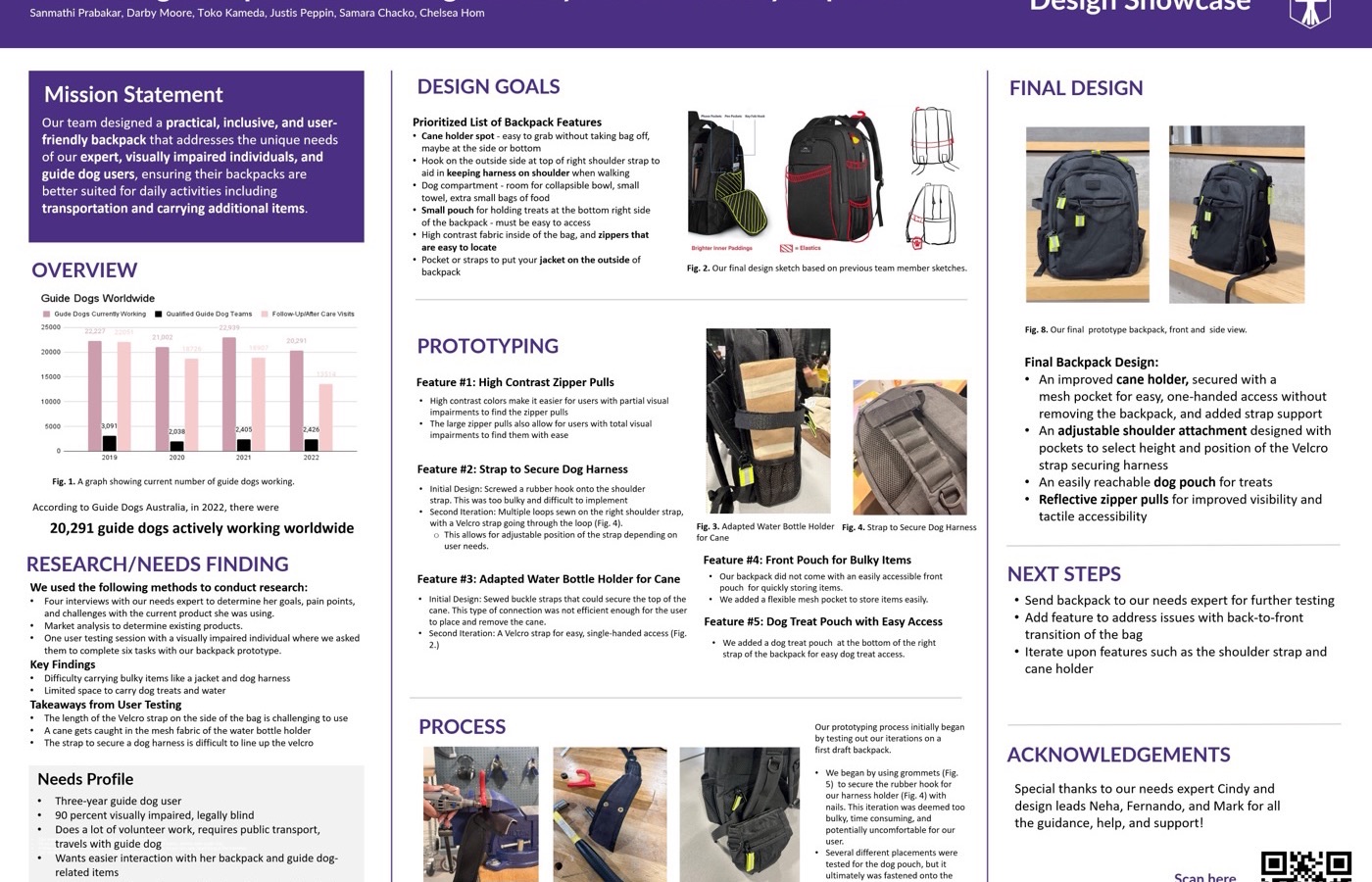
An assistive backpack for guide dog handlers who are visually impaired, designed with and tested by someone who would actually use it.
- My role
- Contributing team member. Design, prototyping, user testing.
- Timeline
- 2024 to 2025
- Team lead
- Sanmathi Prabakar
- Recognition
- Submitted to the RESNA 2025 Student Design Challenge
01
The brief
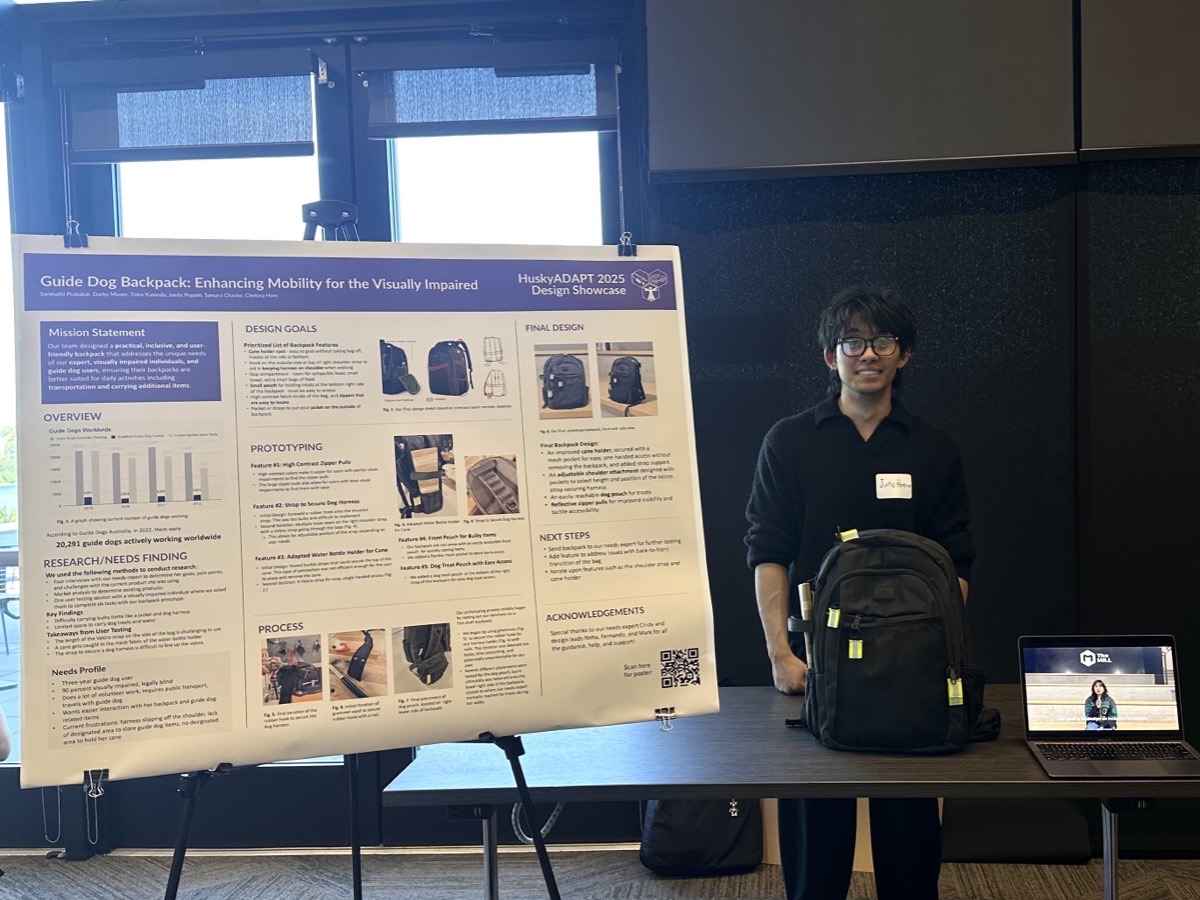
HuskyADAPT is a UW student organization that designs accessible technology. Our six person team took on an assistive backpack for guide dog handlers who are visually impaired, submitted to the RESNA 2025 Student Design Challenge.
Team lead Sanmathi Prabakar. I contributed on design, prototyping, and testing, alongside Darby Moore, Chelsea Hom, Toko Kameda, and Samara Chacko.
02
What the user actually needed
Roughly 20,291 guide dogs were working worldwide as of 2022, per Guide Dogs Australia, and an off the shelf backpack is not built for what a handler and a working dog actually carry together. Our client, a guide dog handler of three years we call C, needed to carry her own gear and her dog's: a cane, a water bottle, a harness, treats, and a bowl. She could not locate a small zipper or an unmarked compartment by touch.
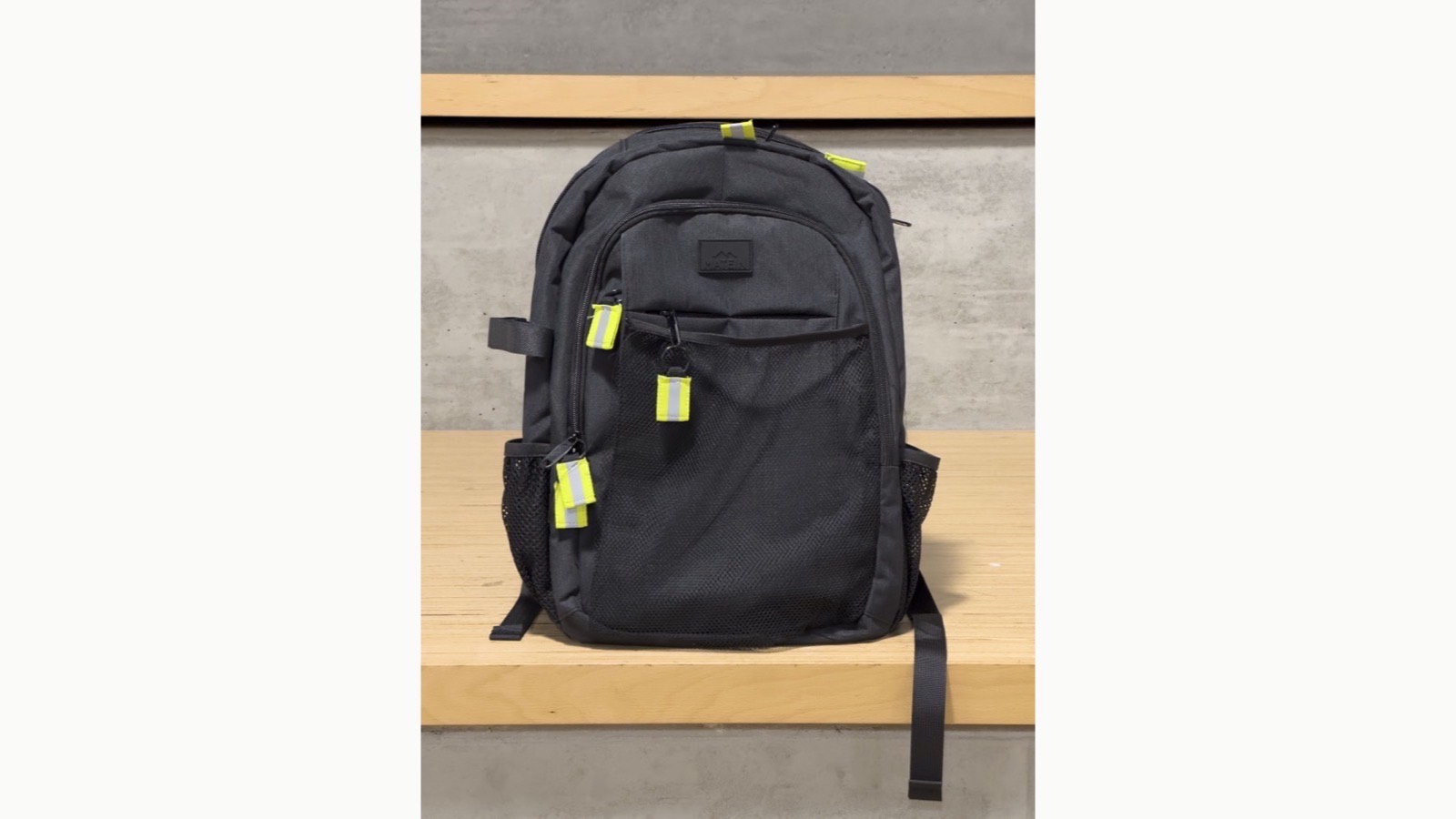
- Secure cane holderReachable and removable with one hand.
- Shoulder attachmentKeeps the guide dog harness from sliding off when it is not in use.
- Tactile zipper pullsHigh contrast, locatable by touch, on every compartment.
- Dedicated dog gear pouchTreats and gear within easy reach, kept separate from her own items.
03
Two iterations that mattered
Two early designs did not survive contact with how C actually operates the bag.
- Decision
- Replaced the cane pocket's buckle with a Velcro strap.
- Why
- A buckle takes two hands and sight to operate. Velcro releases in one motion, one hand.
- Tradeoff
- Less rigid hold, more dependent on getting the strap placement right.
- Decision
- Replaced the harness hook with a Velcro strap at adjustable heights.
- Why
- The hook needed grommets and screw rivets to install, was time consuming, and did not match the hardware we had already bought.
- Tradeoff
- Gave up a fixed, rigid mount for one that installs faster and C can adjust herself.
04
Testing with the person, not about them
We prototyped on a practice backpack first, then moved each feature onto the final one as it held up. Testing ran seven tasks with C, twenty minutes, think aloud throughout: wear and adjust for comfort, operate every zipper pull, load and unload the cane, swing to reach the front pouch, load and unload the dog pouch while walking, and attach and detach the harness strap. Three questions closed it out: what worked, what did not and why, and what she would change.
05
What changed because of testing
Testing surfaced two specific fixes, not general feedback. The Velcro on the cane strap ran its full length, so C had to tear it apart end to end with one hand before she could seat the cane. We sewed over most of the strap and left only the last few inches functional, cutting that motion down to one quick pull. We also added a stiffener to the bottom of the cane pocket, since without shape the pocket collapsed and made the cane harder to locate by feel.
06
Outcome
The design was submitted to the RESNA 2025 Student Design Challenge, built for roughly $170 in materials. The strap and pocket fixes in testing came directly from watching C use the bag, not from a design review: the kind of detail that surfaces only when the person with the hardest constraints tests the thing itself.